
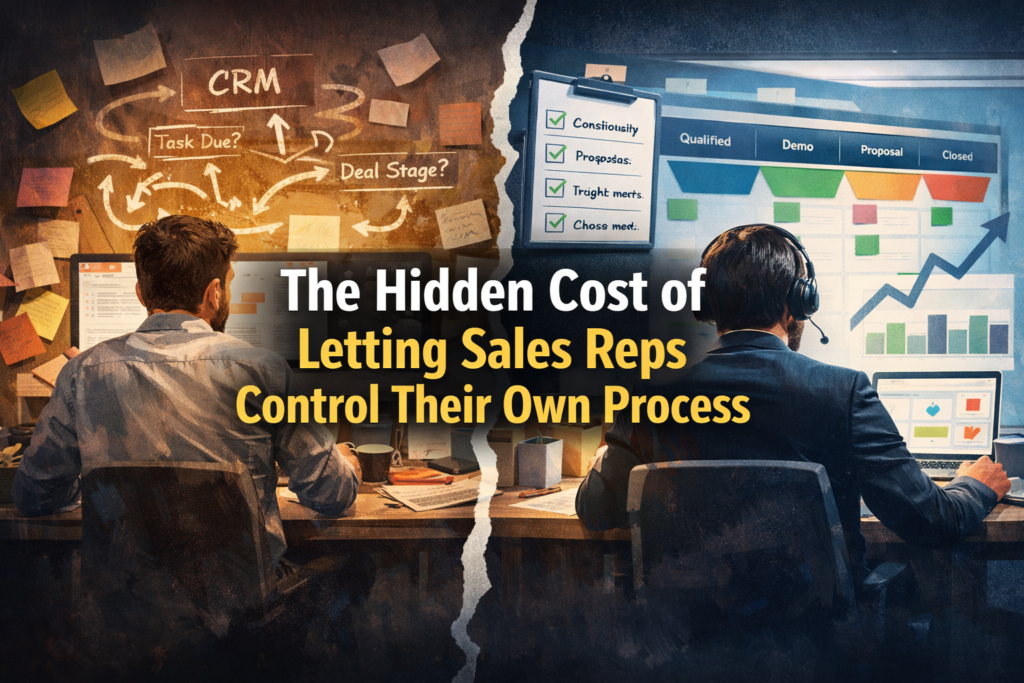
Most sales leaders believe autonomy is a strength.
They let reps:
- manage their own follow-ups
- decide when to move deals
- choose their own messaging
- “work in the way that works best for them”
It feels empowering.
It feels modern.
It feels rep-friendly.
But at scale, it quietly becomes one of the most expensive mistakes in sales.
Autonomy Feels Good. It Doesn’t Scale.
When teams are small, rep-driven processes work.
Everyone sits close.
Managers can course-correct informally.
Strong reps set the tone.
But as soon as a team grows beyond a handful of people, autonomy starts to break execution.
Not loudly.
Not immediately.
Quietly.
Deals stall without obvious reasons.
Pipeline confidence drops quarter by quarter.
Forecasts miss “despite good activity.”
Most leaders blame:
- lead quality
- market conditions
- hiring
The real issue is simpler – there is no system enforcing execution.
What “Rep-Controlled Process” Actually Means
When reps control their own process, a few things always happen:
- Follow-ups become optional
- Deal stages become subjective
- CRM updates lag behind reality
- Best practices live inside individual heads
Two reps selling the same product to the same ICP end up running two completely different sales motions.
From the outside, everything looks fine.
From the inside, execution is fragmented.
And fragmentation is expensive.
The Hidden Costs Most Teams Never Measure
1. Revenue Becomes Rep-Dependent
When reps own the process, results depend on:
- memory
- discipline
- personal habits
Your top performers still win.
Your average reps don’t.
The problem?
Revenue becomes non-repeatable.
If a top rep leaves, performance leaves with them.
That’s not a sales engine.
That’s a risk portfolio.
2. Managers Lose Visibility Before It’s Too Late
Managers typically see:
- pipeline value
- stages
- close dates
They don’t see:
- missed follow-ups
- stalled conversations
- weak buyer engagement
By the time a deal is marked “lost,” the real failure happened weeks earlier.
Without a system enforcing actions, managers only react after damage is done.
3. Forecasting Becomes Guesswork
When reps move deals based on optimism instead of evidence:
- pipeline inflates
- confidence scores mean nothing
- forecasts swing wildly
Leadership starts “gut-checking” numbers instead of trusting systems.
That’s not forecasting.
That’s educated guessing.
4. Sales Learning Never Compounds
In rep-controlled environments:
- messaging success isn’t tracked
- objections aren’t systemized
- win/loss insights disappear
Every rep learns alone.
Every new hire starts from scratch.
The organization never gets smarter – it just gets busier.
Why This Problem Persists (Even in Mature Teams)
Most CRMs were built to record sales activity, not control it.
They answer:
- “What happened?”
- “What stage is this deal in?”
They don’t answer:
- “What should happen next?”
- “What action is missing right now?”
So leaders try to fix the gap with:
- training
- playbooks
- weekly reviews
Those help – briefly.
But without enforcement, discipline always erodes under pressure.
What High-Performing Sales Systems Do Differently
Top revenue teams don’t rely on rep discipline alone.
They build systems that:
- remove decision fatigue
- enforce minimum execution standards
- make inaction visible
In these systems:
- follow-ups are mandatory, not optional
- deals can’t move without proof of progress
- silence triggers action, not hope
Reps still sell.
They just don’t decide whether to execute.
The Shift: From Rep Freedom to System Freedom
This isn’t about micromanagement.
It’s about freeing reps from remembering everything and freeing managers from policing behavior.
A good system:
- tells reps what matters today
- protects deals from neglect
- surfaces problems early
Great reps still outperform.
Average reps stop hurting results.
That’s how scale happens.
Where QuotaRider Fits
QuotaRider is built around a simple belief:
Sales execution should be system-driven, not rep-dependent.
Instead of asking reps to:
- remember follow-ups
- self-diagnose stalled deals
- decide when something “feels ready”
QuotaRider enforces:
- clear next actions
- evidence-based stage movement
- behavior visibility for managers
The system doesn’t replace sales skill.
It amplifies it – and protects revenue from inconsistency.
The Real Question Leaders Should Ask
The question isn’t:
“Do we trust our reps?”
It’s:
“What happens when pressure increases, headcount grows, or key people leave?”
If the answer is uncertainty, the process isn’t owned by the company – it’s owned by individuals.
And that’s a cost most teams only realize after missing targets.
Final Thought
Autonomy without structure doesn’t create freedom.
It creates fragility.
The fastest-growing revenue teams don’t give up control to reps –
they build systems that make the right execution unavoidable.
That’s how sales becomes predictable.
That’s how revenue compounds.